Home Loan Tax Benefits Guide for Sarjapur Road 2026

A home loan does more than spread the cost of an apartment on Sarjapur Road over many years - it also opens up tax deductions that can lower what you pay each financial year. Indian income-tax law lets a borrower claim relief on both the interest and the principal of a housing loan, under separate sections with their own conditions. This guide explains how those benefits are structured for a buyer here, whether you are looking at the pre-launch Godrej Sarjapur township or a ready resale flat in an established corridor project, so you know which deductions exist and what decides them.
One point up front: the exact deduction limits, eligibility windows and conditions are fixed by the Income Tax Act, are revised from time to time in the annual Budget, and differ between the old and the new tax regimes. This guide describes how each benefit works in principle rather than quoting rupee caps or rates, because a figure that is right this year may change. For the numbers that apply to your assessment year and your choice of regime, confirm with a chartered accountant or check the Income Tax Department portal before you plan around them.
Where Home-Loan Tax Benefits Fit
Home-loan tax benefits fall into two main buckets - the interest you pay and the principal you repay - plus a possible extra interest benefit for eligible first-time buyers. Each sits in a different section of the Income Tax Act, with its own limit and conditions.
- Interest paid (Section 24): a deduction on the interest portion of your loan, which is usually the larger benefit in the early years of an EMI.
- Principal repaid (Section 80C): a deduction on the principal portion, within the shared 80C basket that also covers other eligible investments.
- Extra interest for first-time buyers (Section 80EEA): an additional interest deduction for eligible buyers, subject to conditions on the loan and the property.
- What decides your claim: possession status, whether the home is self-occupied or let out, and the tax regime you choose all affect what you can claim.
Bottom line: a home loan can cut your tax through an interest deduction, a principal deduction and, for some first-time buyers, an extra interest benefit - but each has its own rules, so it pays to know which applies to you.
Deduction on the Interest You Pay (Section 24)
Section 24(b) allows a deduction on the interest you pay on a housing loan, and it is often the biggest of the home-loan benefits because interest makes up most of your EMI in the early years. How much you can claim depends on whether the home is self-occupied or let out.
- Self-occupied home: the interest deduction is capped at a limit set by the Act for a home you live in - confirm the current cap for your assessment year.
- Let-out home: the interest treatment differs from a self-occupied one, with its own rules on how much loss you can set off in a year.
- Starts from possession: you generally begin claiming the regular interest deduction from the financial year you take possession of a completed home.
- Per co-owner: co-owners who are also co-borrowers can each claim within their own limit on their share of the interest.
Bottom line: the Section 24 interest deduction is usually the largest home-loan benefit, but the amount depends on self-occupied versus let-out status and starts once you have possession - so confirm the current limit that applies to you.
Deduction on the Principal You Repay (Section 80C)
Section 80C covers the principal portion of your EMI, along with the stamp duty and registration charges you pay when you buy. The catch is that 80C is a single shared limit - your home-loan principal competes with other 80C items such as provident fund, life insurance and tax-saving deposits.
- Principal repayment: the principal part of each EMI qualifies within the overall 80C limit.
- Stamp duty and registration: these one-time costs can be claimed under 80C in the year they are actually paid.
- Shared basket: the 80C limit is common to many investments, so the home-loan principal may only partly fit if you already use 80C elsewhere.
- Five-year hold: if you sell the home within five years of the end of the year you took possession, the 80C benefit already claimed can be reversed.
Bottom line: Section 80C rewards the principal you repay plus your stamp duty and registration, but within one shared limit and with a five-year holding condition - so it helps most when you are not already maxing out 80C.
Extra Interest Benefit for First-Time Buyers (Section 80EEA)
Section 80EEA was introduced to give first-time buyers an additional interest deduction over and above Section 24, aimed at more affordable homes. Whether it applies to your purchase turns on the date your loan was sanctioned and the value of the property, so it is not automatic.
- First-time buyers: the benefit is meant for buyers who do not already own a residential property on the loan-sanction date.
- Sanction window: it applies to loans sanctioned within a specified period, so a loan taken outside that window may not qualify.
- Property-value ceiling: the home's stamp-duty value must sit within the limit the section sets.
- Confirm current applicability: eligibility windows for such sections change, so check whether 80EEA is open for your loan before you count on it.
Bottom line: Section 80EEA can add an extra interest deduction for an eligible first-time buyer, but only within its sanction-date and property-value conditions - confirm it applies to your loan rather than assuming it.
| Provision | What it covers | Key condition |
|---|---|---|
| Section 24(b) | Interest paid on the home loan | Home must be complete; benefit differs for self-occupied vs let-out - confirm the current cap. |
| Section 80C | Principal repaid, plus stamp duty and registration | Shared 80C limit; do not sell within five years or the benefit reverses. |
| Section 80EEA | Additional interest for first-time buyers | Subject to the loan-sanction window and a property-value ceiling - confirm current applicability. |
Bottom line: the three provisions target different parts of your loan - interest, principal and an extra first-time-buyer slice - and each carries a condition that decides whether you can use it.
Under-Construction Homes and Pre-Construction Interest
For a pre-launch or under-construction home such as the Godrej Properties township at Sarjapura, you start paying interest well before you get the keys. The law handles that interest differently from a completed home, so it is worth understanding before you buy off-plan.
- No year-by-year interest claim during construction: you cannot deduct the interest in each year while the home is still being built.
- Pre-construction interest, spread later: the total interest paid before completion is claimed in equal instalments over a set number of years, starting from the year construction is completed.
- Regular interest after possession: once the home is complete, the normal Section 24 interest deduction runs alongside those instalments.
- Principal waits too: the 80C principal benefit generally applies once the property is complete, not during construction.
Bottom line: buying under construction does not lose you the interest benefit, but it delays it - the pre-possession interest is banked and released in instalments from the year you get possession.
Joint Home Loans and Co-Owners
A joint home loan can raise the total tax benefit for a household, but only when the paperwork lines up. The rule is simple: to claim, a person must be both a co-owner of the property and a co-borrower on the loan.
- Each claims their share: co-owners who are co-borrowers can each claim interest and principal on their portion, within their own individual limits.
- Ownership must match borrowing: a co-borrower who is not an owner, or an owner who is not on the loan, generally cannot claim.
- Useful for working couples: two earners can together claim more than a single borrower, subject to each person's limits.
- Keep records of the split: decide and document the ownership and repayment share so each person's claim is clean.
Bottom line: a joint loan where both partners are co-owners and co-borrowers lets each claim on their share, which can meaningfully increase the household's overall home-loan tax benefit.
1. Godrej Sarjapur

Godrej Sarjapur is a pre-launch, forest-themed township by Godrej Properties at Sarjapura, off Sarjapur-Attibele Road. As a tax example, a pre-launch buy means you may service the loan during construction, so the interest you pay before possession is banked as pre-construction interest and claimed in instalments from the year you get the keys - here that is targeted for December 2030. Its Karnataka RERA registration is in process and expected at the official launch, so verify the live number before committing.
- Builder: Godrej Properties Limited
- Location: Sarjapura, ~30 acres, 85-90% open space
- RERA: K-RERA in process - verify the number at launch
- Configuration: 2, 3 & 4 BHK
- Ticket size: ~Rs 1.45 crore (base rate ~Rs 13,500/sq ft)
- Status: Pre-launch, official launch targeted December 2026, possession targeted December 2030
Bottom line: a pre-launch buy where the interest benefit is delayed to possession and banked as instalments - compare the floor plans and price list before you decide.
2. Prestige City
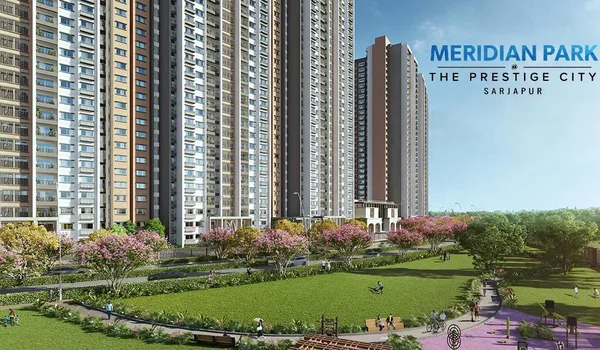
Prestige City is a township-scale gated community by Prestige Group on Sarjapur Road, with 1, 2 and 3 BHK homes across multiple enclaves. As a tax example, an under-construction unit here follows the same pre-construction-interest rule - interest is banked until completion and then released in instalments - while a ready unit lets you claim the regular Section 24 interest from possession. Verify the live RERA number and the possession timeline for your tower.
- Builder: Prestige Group
- Location: Sarjapur Road
- RERA: RERA-registered - verify the number for your tower
- Configuration: 1, 2 & 3 BHK
- Ticket size: ~Rs 90 lakh
- Status: Under construction
Bottom line: a large project where an under-construction unit banks its interest to possession, while a ready unit starts the interest benefit straight away.
3. Birla Evara

Birla Evara is a newer gated project by Birla Estates on Sarjapur Road, with 2 and 3 BHK homes and a longer possession runway. As a tax example, an under-construction home with a possession date a few years out means a longer pre-construction period - so more interest is banked before the deduction begins in instalments from completion. Confirm the registration number and the possession timeline before you decide.
- Builder: Birla Estates
- Location: Sarjapur Road
- RERA: RERA-registered - verify the current number
- Configuration: 2 & 3 BHK
- Ticket size: On Request
- Status: Under construction (possession ~2032)
Bottom line: a longer possession runway means a longer pre-construction interest bank, so plan the timing of your deductions around the completion year.
4. Sobha Royal Pavilion

Sobha Royal Pavilion is a gated community by Sobha Limited on Sarjapur Road, with 3 and 4 BHK homes built to Sobha's in-house construction standard. As a tax example, a ready or near-ready unit is the simplest case - you can begin claiming the regular Section 24 interest and the 80C principal from the year you take possession, with no pre-construction wait. Confirm the current inventory and the RERA number for your phase.
- Builder: Sobha Limited
- Location: Sarjapur Road
- RERA: RERA-registered - verify the number for your phase
- Configuration: 3 & 4 BHK
- Ticket size: On Request
- Status: Under construction / ready phases
Bottom line: a ready unit is the cleanest for tax - the interest and principal deductions can begin from possession with no pre-construction interest to bank.
How to Plan Your Home-Loan Tax Benefits
Treat the tax benefit as one input into the buy, not the reason for it. Match the deduction timing to the home: a ready unit lets the interest and principal deductions begin from possession, while a pre-launch home such as the Godrej Properties township at Sarjapura banks its pre-construction interest until you get the keys. If you are buying jointly, put both partners on the title and the loan so each can claim their share. Weigh the old and new tax regimes together, since the benefits differ, and keep your interest certificate and repayment records ready at filing time. For corridor background, read the Sarjapur Road property guide and the project location and connectivity on this site, and note that Sarjapura anchors the southern end of this corridor. For the figures that apply to your case, have a chartered accountant confirm the current limits.
Bottom line: plan the benefit around possession timing, joint ownership and your choice of tax regime - and confirm the current limits with a chartered accountant rather than fixed numbers you read online.
Frequently Asked Questions
1. What tax benefits does a home loan give?
A home loan can give you a deduction on the interest you pay under Section 24 and a deduction on the principal you repay under Section 80C, and eligible first-time buyers may also claim an extra interest benefit under Section 80EEA. The exact limits and conditions are set by the Income Tax Act and differ between the old and new tax regimes, so confirm the current figures with a chartered accountant.
2. Can I claim tax benefits on an under-construction flat?
You cannot claim the interest deduction year by year while the home is still under construction. The interest paid during construction is added up and claimed in equal instalments over a set number of years starting from the year construction is completed, alongside the regular interest deduction once you have possession.
3. Do the old and new tax regimes offer the same benefits?
No. The deductions available for a home loan differ between the old and the new tax regime, and some benefits available under one may not apply under the other. Which regime works better depends on your overall income and deductions, so compare both with a chartered accountant before you decide.
4. Can co-owners both claim home-loan tax benefits?
Yes, if they are both co-owners of the property and co-borrowers on the loan. In that case each person can claim the interest and principal deductions on their share of the loan, within their own individual limits, which can raise the household's total benefit.
5. Is stamp duty eligible for a tax deduction?
Stamp duty and registration charges can be claimed under Section 80C in the year they are actually paid, within the overall 80C limit that is shared with other eligible investments. Because it is a one-time benefit tied to the year of payment, confirm the current rules with a chartered accountant.
6. When do home-loan tax benefits start?
The interest deduction under Section 24 generally starts from the financial year in which you take possession of a completed home, with pre-construction interest spread over later years. The principal deduction under Section 80C applies to repayments once the property is complete, so timing is tied to possession.
Conclusion
Home-loan tax benefits can lower the real cost of buying an apartment on Sarjapur Road, but only if you know which ones apply to you and when. The interest deduction under Section 24 is usually the largest, the Section 80C principal benefit sits within a shared limit, and eligible first-time buyers may add the Section 80EEA interest slice. Timing matters most: a ready home lets the deductions start from possession, while a pre-launch home such as the Godrej Properties township at Sarjapura banks its interest until you get the keys. Put both partners on the title and the loan for a joint purchase, weigh the old and new regimes, and keep your records ready at filing. Because the caps and conditions are set by law and change over time, confirm the current figures with a chartered accountant, then check the current prices and cost sheet with the developer before you commit.
Godrej Sarjapur Blog
 Sarjapur Road — Real Estate Guide 2026
 Top 10 Residential Apartment Projects in Sarjapur Road 2026
 RERA Approved Pre Launch Projects in Sarjapur Road 2026
 Ready to Move Apartments in Sarjapur Road 2026
 New Launch Apartment Projects in Sarjapur Road 2026
 Sarjapur Road Property Price Trends 2026
 3 BHK Apartments for Sale in Sarjapur Road 2026
 Is Sarjapur Road a Good Place to Invest in 2026?
 Godrej Properties Projects in Sarjapur Road 2026
 Best Gated Community Apartments in Sarjapur Road 2026
 Resale Apartments in Sarjapur Road 2026
 Top Builders & Developers in Sarjapur Road 2026
 Sarjapur Road vs Whitefield 2026 — Which to Buy?
 2 BHK Apartments for Sale in Sarjapur Road 2026
 Apartments Near Wipro & ORR Tech Park 2026
 Affordable Apartments in Sarjapur Road 2026
 4 BHK Apartments for Sale in Sarjapur Road 2026
 Villa & Plotted Projects in Sarjapur Road 2026
 Under Construction Apartments in Sarjapur Road 2026
 Sarjapur Road vs Electronic City 2026 — Which to Buy?
 Sarjapur Road vs HSR Layout 2026 — Which to Buy?
 Apartments Near Electronic City from Sarjapur Road 2026
 Apartments Near Top Schools on Sarjapur Road 2026
 Godrej Upcoming & Pre-Launch Projects in Sarjapur Road 2026
 Pet & Senior Friendly Gated Communities in Sarjapur Road 2026
 1 BHK Apartments for Sale in Sarjapur Road 2026
 Sarjapur Road vs Bellandur 2026 — Which to Buy?
 Sarjapur Road vs Marathahalli 2026 — Which to Buy?
 Apartments Near the Upcoming Sarjapur Metro 2026
 Godrej Completed & Ready-to-Move Projects in Sarjapur Road 2026
 Apartments Near Top Hospitals on Sarjapur Road 2026
 Sarjapur Road vs Varthur 2026 — Which to Buy?
 Apartments with Clubhouse & Modern Amenities in Sarjapur Road 2026
 Vastu-Compliant Apartments in Sarjapur Road 2026
 NRI Guide to Buying Apartments in Sarjapur Road 2026
 Sarjapur Road vs Kanakapura Road 2026 — Which to Buy?
 High-Rise vs Low-Rise Apartments in Sarjapur Road 2026
 Home Loan & Buying-Process Guide for Sarjapur Road 2026
 Apartments Near Decathlon & Sarjapur Main Road 2026
 Sarjapur Road vs Hennur Road 2026 — Which to Buy?
 Sarjapur Road Connectivity & Infrastructure Guide 2026
 Stamp Duty & Registration Charges Guide 2026
 Property Tax & Khata Guide 2026
 How to Verify a Project on K-RERA 2026
 Carpet Area vs Super Built-Up Area Guide 2026
 Occupancy & Completion Certificate (OC/CC) Guide 2026
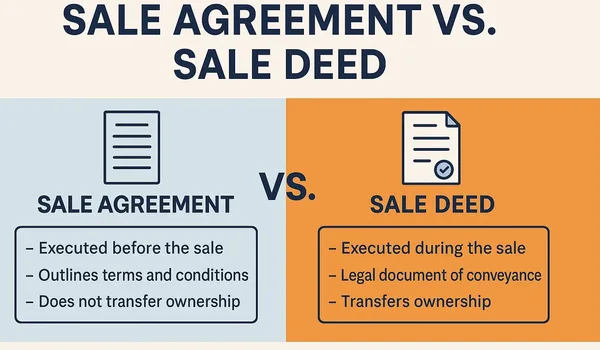 Sale Agreement vs Sale Deed - Buyer's Guide 2026
 Best Time to Buy an Apartment in Sarjapur Road 2026
 Encumbrance Certificate (EC) Guide 2026
 GST on Property Guide 2026
 Possession & Handover Checklist 2026
 e-Khata & e-Aasthi Transfer Guide 2026
 Power of Attorney & Property Documents Guide 2026